Disposal London in London
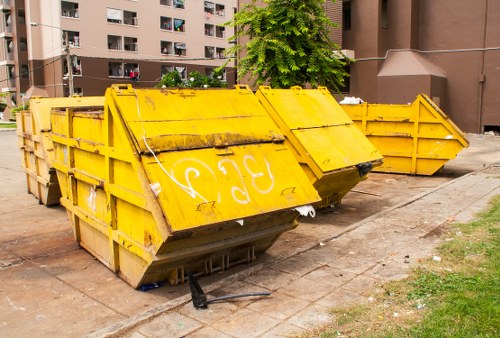
Disposal London provides waste disposal in London for homes, flats, landlords, offices and commercial premises that need unwanted items taken away with care and organised handling. Our main work is the collection, removal and disposal of general waste and bulky items, with practical support for common loads such as furniture, appliances, mixed rubbish and cleared spaces. The service is aimed at customers who want a straightforward way to deal with unwanted waste without arranging multiple trips or trying to sort every item alone.
We handle a wide range of disposal work, from single-item collections to larger clearances where several rooms or storage areas need attention. The service can suit situations where items are too large for normal household disposal, where a property is being emptied, or where business waste has built up and needs removing in one visit. Where items can be separated for recycling, we can manage that within the collection process, helping the load move through the correct route rather than being treated as one mixed pile.
If you need a clear starting point, begin with the type of waste, the access to the property and the broad volume involved. A brief description is usually enough to identify the right disposal approach. For a quotation, just send the main details and we can guide you on the next step.
Household waste disposal and bulky item removal
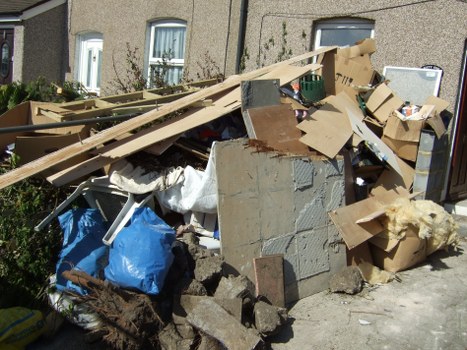
Household disposal often starts with the awkward items that are hard to move, store or fit into standard bins. Furniture, mattresses, broken household goods and mixed bagged waste can all need different handling once they are lifted and loaded. We organise collections so that bulky pieces are taken away efficiently, while smaller material can be gathered together into a single, practical removal plan. That makes the process easier for customers who want the job completed without lots of separate arrangements.
When a home contains several kinds of waste, the aim is not simply to take everything away as a pile. It is to assess what can be removed together, what needs care because of size or weight, and what may be suitable for recycling or separate disposal routes. Bulky waste collection is a useful starting point for larger domestic loads, especially where a room, garage or storage space is dominated by oversize items rather than ordinary refuse.
For customers dealing with furniture and white goods, the key decision is often whether the items are being cleared as part of a larger domestic load or removed as a one-off. Sofas, wardrobes, beds, fridges and freezers can create different handling needs, so the collection should reflect both the item type and the access available. A short note about stairs, lifts, parking or restricted entry helps the work plan stay realistic. Furniture removal and collection is especially relevant when several pieces need lifting from one property.
Service options for homes, flats and property clearances
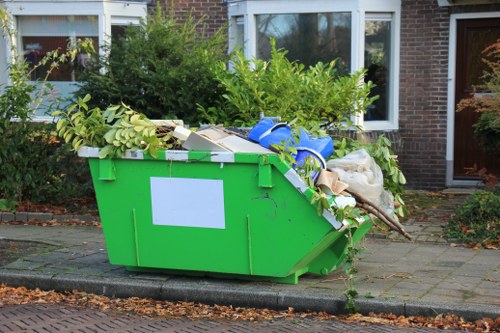
Some jobs are closer to a full property clearance than a simple rubbish uplift. That can include removing mixed items left after a move, clearing storage areas, or dealing with contents that have accumulated over time. In those cases, the disposal work needs an orderly approach, because the load may contain reusable, recyclable and general waste all together. Our service is set up to manage those practical differences so that the removal is not treated as a one-size-fits-all task.
Flats and shared buildings often require extra planning because access, stairs, lifts and parking can affect how the work is carried out. A careful collection process matters where items must pass through tighter spaces or where building rules shape the timing and method of removal. If the job involves a whole home or a significant portion of one, the details can be discussed through home clearance, which is a suitable route for broader domestic clearance needs and not only for isolated items.
Where a property is being emptied for sale, refurbishment or handover, disposal decisions are usually influenced by what remains on site and how mixed the contents are. Some loads are mainly furniture and household items; others are a combination of rubbish, broken fixtures and boxed belongings that need sorting as they come out. The more mixed the load, the more useful it is to say whether you need itemised removal or a general clear-out, because that affects how the work is organised and quoted.
Commercial waste disposal and office collections
Commercial disposal needs a different rhythm from a domestic job because offices, shops and other workplaces may generate waste from furniture changes, storage reshuffles or routine clearing. We can remove desks, chairs, office equipment and mixed commercial rubbish as part of a scheduled collection or a larger clearance. The work is aimed at businesses that want items taken away in an orderly way, with attention to access, building rules and the volume of material involved.
For workplaces, it is useful to think about whether the waste is general, recyclable, or linked to a specific change such as a relocation or refurbishment. That distinction helps determine the most suitable route for removal. Commercial waste collection is a practical option when a business needs repeat or one-off removal of non-domestic waste, while broader clearance jobs can include storage rooms, back offices or items left after changes in layout.
Office work often needs a tidy sequence: check what is being removed, decide what stays, and make sure there is enough access to move items without slowing the premises down. That is particularly important when several desks or large quantities of paperwork, packaging or broken equipment are involved. The service is not limited to one type of workplace, but the collection method should always match the premises and the sort of waste being cleared.
Recycling, sorting and disposal routes
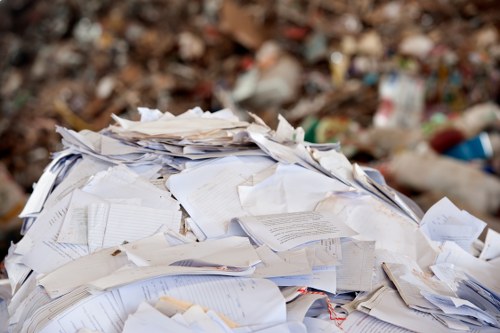
Disposal work is more useful when the waste stream is handled with some separation rather than treated as a single mixed load from the outset. Furniture, metal items, wood, electrical goods and bagged waste may each follow different routes depending on their condition and material type. That means a responsible collection is as much about sorting as it is about lifting and transport. It also helps keep the job clear for the customer, because the outcome is more defined than simply “everything goneâ€.
Where there is a mixed load, the right approach is to identify the parts that can be directed towards recycling and the parts that require disposal. Waste recycling is relevant when customers want a service that recognises material separation, particularly for jobs where the contents include recyclable components alongside general rubbish. This is especially useful in clearances where wood, metal, plastics and paper may all appear in the same space.
Supported disposal work is usually better when the collection plan reflects the actual contents of the site. If a property contains clean reusable items, mixed rubbish and broken fittings, it is sensible to describe those categories plainly before the job begins. That way, the removal can be planned around lifting, loading and the likely disposal route, rather than leaving those decisions until the last minute. It also gives a better basis for any quotation, because the waste type matters as much as the volume.
Common items we are asked to remove
Many disposal jobs are built around a handful of familiar item types. Sofas, beds, mattresses, wardrobes, fridges, freezers, washing machines, desks and assorted household goods are common examples, but the real point is not the item label alone. Size, weight, condition and where the object sits in the property all affect how it can be moved. A heavy item on a ground floor is a different task from the same item in a top-floor flat with narrow access.
The practical decisions are straightforward: what needs to go, how much there is, and whether the load contains one type of object or several. Mattress removal and collection is one example of a focused service page that suits a defined item type, while larger mixed removals may combine mattresses with other household waste or furniture. Fridge disposal is another useful option where white goods need to be handled separately from ordinary rubbish.
Some loads are dominated by one category, and others are deliberately mixed because they come from a room clear-out or a property being prepared for change. In either case, it helps to be precise about what is included. If a sofa is being removed alongside smaller waste, the quotation should reflect the combined task rather than assuming a single-item visit. That makes the service clearer and avoids confusion about what is and is not part of the collection.
Planning access, loading and quotation details

A disposal quotation is usually easier to prepare when the basic access details are clear. Steps, lifts, parking restrictions, distance from the collection point and any awkward carrying route can all affect how the job is arranged. For that reason, it is helpful to note whether the waste is on the ground floor, in a loft, in a garage or in a shared building. Those details do not need to be complicated; they simply help define the amount of lifting and moving involved.
It is also worth saying whether the waste is already gathered together or still spread across several rooms. A tidy stack is not essential, but the collection becomes easier to assess when the volume and type are easier to see. Pricing and quotes is the natural place to look when you want to request a quotation or understand how the service is priced, because the cost will normally depend on the amount, type and handling of the material being removed.
For the smoothest start, a short note with the property type, the item list and any access issues is usually enough. If you are ready to move forward, ask for a quotation and we can help from there. For mixed domestic or commercial loads, clear information leads to a more accurate and practical response.
Waste disposal for larger clearances and property change
Some disposal jobs arise when a property is changing hands, being refurbished or emptied after years of use. In those situations, the work may include everything from broken furniture and bagged waste to loose items stored in cupboards, lofts or outbuildings. The scale can be significant, but the principles remain the same: identify the load, separate what matters and remove it in a way that suits the property and the contents.
Property clearance is well suited to jobs where the main aim is to empty or substantially reduce the contents of a place rather than remove one or two items. That can include domestic or commercial premises, and it often involves mixed material that needs sorting as part of the work. When the site contains a blend of rubbish, furniture and reusable items, the clearance plan needs to reflect that variety.
For customers, the decision point is often whether the job is best described as disposal, clearance or a combination of both. A straightforward waste uplift may only need a few items taken away. A broader clearance can involve more rooms, more categories and a more careful sequence of removal. Being honest about the scope at the outset helps keep the collection efficient and makes the quotation more relevant to the actual work.
About London
London is a vast capital city shaped by layers of history, transport corridors, river crossings and continuously changing neighbourhoods. The River Thames remains one of its defining physical features, threading past Westminster, the City, Southwark and Greenwich while also framing many of the capital’s most recognisable views. Its built environment ranges from medieval street patterns and Georgian terraces to Victorian infrastructure, post-war estates and contemporary high-rise developments, with each period leaving a distinct mark on the urban fabric. The city’s scale makes it feel less like a single place and more like a collection of connected districts, each with its own character and pace. Central London contains government, finance, culture and tourism within a compact core, while outer boroughs blend residential streets, industrial zones, parks and town centres. Landmarks such as the Palace of Westminster, the Tower of London, St Paul’s Cathedral and the South Bank sit alongside smaller local places that are equally important to everyday life. Green spaces are a major part of the city too, from Hyde Park and Regent’s Park to Hampstead Heath, which gives a different sense of openness to the denser streets nearby. Transport is another defining feature, with the Underground, Overground, national rail, buses, river services and major terminals linking the capital across and beyond its boundaries. London’s cultural life is correspondingly broad: theatres, galleries, museums, markets, music venues and community spaces are spread across the city rather than confined to one district. Its administrative structure includes the City of London and thirty-two boroughs, and that layered geography helps explain why the capital can feel both highly connected and remarkably varied at the same time.
What to expect from a disposal enquiry
When you make an enquiry, the most useful information is usually the simplest: what needs removing, where it is located and whether there are any obstacles to access. If you already know the item list, that can help; if not, a broad description is still useful enough to begin. The service can then be matched to a domestic clear-out, a commercial uplift or a mixed load that includes bulky items and general waste together.
A good quotation should follow the job rather than force the job to fit a fixed description. That is why it helps to mention whether the contents are bulky, broken, recyclable or mixed, and whether the removal is from a flat, house, office or storage area. If you are comparing options, look at the kind of work each service is set up to handle before deciding. A brief note to request a quotation is often the best next step, especially where the load is more than a simple bin bag collection.
If you are ready to arrange disposal in London, send the details and ask for a quotation. We will use the information to match the work to the right removal approach and keep the process clear from the beginning.