Recycling and Sustainability with Disposal London
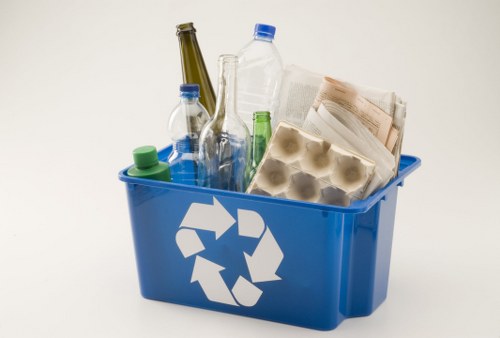 At Disposal London we place sustainability at the core of our city services. Our Recycling and Sustainability page explains how Disposal London recycling and waste management work hand-in-hand to reduce landfill, cut emissions and support communities across the boroughs. We have set a clear recycling percentage target of 65% by 2030 for material diverted from landfill — an ambitious but achievable goal that drives route planning, materials processing and partnerships. This target aligns with the spirit of many London boroughs seeking higher rates of separation for food, glass and mixed recycling.
Our approach increases resource recovery across residential and light commercial collections. We collaborate with local authorities that prioritise separate food waste collections, kerbside glass bins and communal textile drop-offs, while tailoring Disposal London sustainability services to each neighbourhood. By recognising borough-level nuances — for example, different boroughs opting for co-mingled versus source-separated recyclables — we optimise sorting at transfer points and reduce contamination.
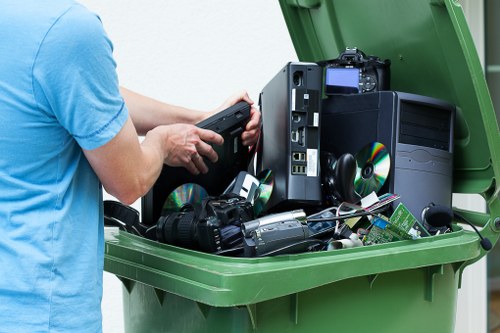 We operate in close conjunction with a network of local transfer stations and community transfer hubs. These transfer stations act as key nodes where materials are consolidated, quality-checked and routed to appropriate processors. Disposal London transfer stations include strategically located facilities across north, south and east London that shorten haul distances, lower vehicle emissions and speed up turnaround times. The hub model supports increased recycling performance by enabling faster diversion of organics, paper, metal and glass to specialist reprocessors.
Low-carbon fleet and operational innovation
Disposal London has invested significantly in a modern, low-emission fleet of vans and collection vehicles. Our low-carbon vans and hybrid trucks reduce fuel consumption and urban pollution while ensuring reliable doorstep collections. The fleet programme includes electric-powered vans for small-jobs and last-mile collections, along with Euro 6-compliant vehicles for heavier transfers. Choosing low-carbon vehicles is one of the most effective steps we take to lower the carbon intensity of disposal and recycling activity in dense urban areas.
 Operational measures complement vehicle upgrades: smarter route planning reduces miles driven, while on-board telematics monitor fuel use and idling. We also run targeted pilot schemes to evaluate the benefits of cargo bikes and zero-emission micro-depots in congested borough centres. These innovations support Disposal London sustainability goals and provide scalable models for other London recycling services seeking to cut emissions.
Recycling and reuse go together: Disposal London works with authorised processors to ensure materials collected at local transfer stations are prepared for high-quality recycling. We prioritise closed-loop outcomes for paper, glass and metals, and partner with specialist organics processors for food waste and garden waste streams. Our systems aim to minimise downcycling and maximise the resale and remanufacture of recovered materials.
Partnerships with charities and community partners
 A crucial part of Disposal London recycling efforts is our network of charity partnerships. We collaborate with local charities and social enterprises to redirect reusable items, furniture and clothing away from disposal. These partnerships provide social value: items recovered through donation schemes are refurbished, resold or given to households in need, creating local jobs and extending product lifecycles. Waste reduction is as much a social mission as an environmental one.
 Our community-based programmes include furniture re-use chains, electronics take-back events and coordinated textile collection drives. Disposal London sustainability staff work with charity partners to ensure safe handling, proper testing of refurbished goods and compliant data-wiping of electronic devices. These collaborations reduce the tonnage sent to recycling processors and directly increase the volume of materials re-entering the circular economy.
We also support borough-level communications and behaviour-change campaigns to raise recycling participation. Simple, consistent messaging about what goes in which bin, coupled with clear signage at communal points, has proven effective in reducing contamination and lifting overall capture rates. As Disposal London continues to evolve, we will keep strengthening partnerships, expanding our low-carbon fleet and investing in transfer-station capacity to meet our 65% recycling target and beyond.
Key initiatives at a glance:
- 65% recycling target by 2030 for diverted materials and resource recovery.
- Local transfer stations and community depots to reduce haul distances and improve sorting quality.
- Low-carbon vans and electric vehicles for last-mile collections and reduced emissions.
- Partnerships with charities to re-use and refurbish furniture, clothing and electronics.
- Support for borough-led waste separation schemes including separate food and glass streams.
Disposal London recycling and waste services are committed to transparent progress: we monitor diversion rates, vehicle emissions and the social outcomes of our charity collaborations. The path to a greener, more circular London is a shared one — and Disposal London is proud to play a practical role through operational excellence, community partnerships and continuous improvement.